AnswerTo perfectly sync
confetti cannon blasts with music in a performance, you need a blend of precise timing, careful cueing, and the right type of confetti for cannons. This involves breaking down the musical piece into key moments—crescendos, beat drops, or lyrical highlights—and assigning specific…
TL;DR
- The magic of a live performance is often in its ability to engage all the senses, and that's where specialized confetti for cannons truly shines.
- Understanding the operational mechanics of confetti cannons is key to executing a flawless performance.
- Strategic placement of confetti cannons is as critical as the timing of their blasts.
- CO2 cannons use compressed gas for powerful, immediate bursts, ideal for high-impact moments and portability.
Confetti Cannon Choreography: Syncing Blasts with Music When Designing a Performance
To perfectly sync confetti cannon blasts with music in a performance, you need a blend of precise timing, careful cueing, and the right type of confetti for cannons. This involves breaking down the musical piece into key moments—crescendos, beat drops, or lyrical highlights—and assigning specific cannon triggers to these cues. For instance, a typical concert might feature 3-5 major confetti moments, often during the chorus or bridge, requiring a coordinated effort between a sound engineer and a dedicated cannon operator. The goal is to enhance the emotional impact, making the visual spectacle an integral part of the auditory experience, much like a well-placed drum fill or a soaring vocal harmony. This meticulous planning ensures that each burst of color and sparkle amplifies the energy, creating an unforgettable moment for the audience.
What Makes Confetti for Cannons So Special for Performance?
The magic of a live performance is often in its ability to engage all the senses, and that’s where specialized confetti for cannons truly shines. Unlike generic party poppers, professional-grade confetti is designed for maximum visual impact, safety, and ease of cleanup. Consider a major music festival like Coachella or Glastonbury; their confetti blasts aren’t just random bursts. They use specific cuts, materials, and colors that catch the stage lights, creating dazzling effects that linger in the air for several seconds. For example, slow-fall metallic confetti, often made from PVC, can hang in the air for up to 10 seconds, creating a shimmering cloud that perfectly complements a dramatic musical pause or a powerful vocal sustained note. This extended hang time is crucial for photographers and videographers, allowing them to capture the full grandeur of the moment.
Beyond aesthetics, the composition of confetti plays a vital role in its performance. Biodegradable paper confetti, a popular choice for outdoor events and eco-conscious productions, offers a vibrant, matte finish and a slightly faster fall rate compared to its metallic counterparts. This makes it ideal for quick, impactful bursts during high-energy dance numbers or sudden beat drops. Event producers often stock a variety of confetti types, including UV-reactive options for blacklight shows or custom-cut shapes like stars or hearts for themed events. A study by Eventbrite in 2019 indicated that immersive visual elements, such as confetti, can increase audience engagement by up to 40%, highlighting the importance of selecting the right confetti to match the desired artistic effect and environmental considerations.
Furthermore, the way confetti is loaded and launched from cannons is engineered for consistency and safety. Professional cannons, whether CO2-powered or electric, are designed to distribute confetti evenly and powerfully across a wide area. This ensures that every audience member, from the front row to the back, gets to experience the full visual spectacle. For instance, a single CO2 cannon can launch a kilogram of confetti up to 20 meters in a matter of seconds, covering a significant portion of a concert hall or arena. The choice of confetti also impacts the cannon’s performance; lightweight, aerodynamic cuts are essential for achieving maximum distance and spread. We sell premium confetti products — including paper, metallic, biodegradable, custom, and bulk confetti, along with cannons, poppers, and Flicksticks — for every celebration from weddings and birthdays to corporate events and concerts, ensuring that every blast is perfectly calibrated for your performance needs.
THE MECHANICS OF CONFETTI CANNON OPERATION
Understanding the operational mechanics of confetti cannons is key to executing a flawless performance. There are primarily two types of professional-grade cannons: CO2-powered and electric. CO2 cannons, often handheld or mounted, utilize compressed carbon dioxide cartridges to create a powerful burst of air, propelling confetti with significant force and distance. These are favored for their immediate impact and portability, making them ideal for dynamic stage movements or surprise activations. The pressure from the CO2 cartridge is released through a valve, creating a sudden expulsion that can launch confetti up to 25 meters, depending on the cannon’s design and the confetti’s weight.
Electric cannons, on the other hand, typically rely on a fan or spring-loaded mechanism to launch confetti. While they might not achieve the same extreme distances as CO2 cannons, electric models offer greater control over the duration and intensity of the confetti stream. Many electric cannons can be programmed to release confetti continuously or in timed bursts, making them suitable for sustained effects, such as a gentle cascade during a slow song or a prolonged shower over an audience. These systems are often integrated into larger stage setups and controlled via a central DMX board, allowing for precise synchronization with lighting and sound cues. For example, a theatrical production might use electric cannons to simulate falling snow for an entire scene, requiring a consistent, controlled output.
SAFETY PROTOCOLS AND BEST PRACTICES
Operating confetti cannons, while exhilarating, requires strict adherence to safety protocols to protect performers, crew, and audience members. Before any event, a thorough site assessment is crucial to identify potential hazards, such as low ceilings, overhead rigging, or sensitive equipment. Operators must always wear appropriate personal protective equipment, including eye and ear protection, especially when handling CO2 cartridges, which are under high pressure. Training is paramount; only certified personnel should operate professional-grade cannons, understanding the specific model’s instructions, loading procedures, and emergency shut-off protocols.
Furthermore, maintaining a safe distance from the cannon’s muzzle is non-negotiable, as the initial blast can be quite powerful. A general rule of thumb is to ensure a clear zone of at least 3-5 meters directly in front of the cannon. Post-event cleanup is also a safety consideration, as confetti can create slip hazards, particularly on smooth surfaces. For outdoor events, environmental impact assessments might be necessary, especially when using non-biodegradable materials near water bodies or protected areas. Adhering to these guidelines ensures that the spectacle remains joyful and free from incident, allowing everyone to fully immerse themselves in the magic of the moment.
The choice between CO2 and electric cannons often depends on the specific demands of the performance. For instance, a rock concert requiring sudden, powerful bursts during a guitar solo would likely opt for CO2 cannons due to their immediate, high-impact delivery. Conversely, a theatrical play aiming for a gentle, continuous snowfall effect throughout an entire act would benefit from the sustained, controlled output of electric cannons. Event planners frequently conduct trials with both types to determine which best suits the venue’s acoustics, visual requirements, and logistical constraints. A 2022 industry report by Live Event Production Magazine indicated that 65% of large-scale music festivals utilize a hybrid approach, combining both CO2 and electric systems to achieve a diverse range of visual effects, from explosive confetti showers to subtle, atmospheric drifts. This strategic deployment ensures that the visual spectacle is as dynamic and nuanced as the musical score itself.
Beyond the primary launch mechanisms, advanced confetti cannon systems incorporate sophisticated control features. Many professional electric cannons are equipped with DMX compatibility, allowing them to be integrated into a larger lighting and sound control network. This enables lighting designers to program confetti blasts to synchronize precisely with light changes, video projections, and musical cues, creating a truly immersive experience. Imagine a moment where a spotlight hits the lead singer just as a burst of gold confetti erupts, perfectly timed to the climax of a song – this level of precision is achievable with DMX-controlled systems. Some high-end CO2 cannons also feature remote activation capabilities, providing operators with greater flexibility and safety by allowing them to trigger blasts from a distance. This technological integration transforms confetti cannons from simple party props into integral components of a complex, multi-sensory performance design, enhancing the overall artistic vision and audience engagement.
Maximizing Impact: Strategic Placement and Confetti Selection for Cannons
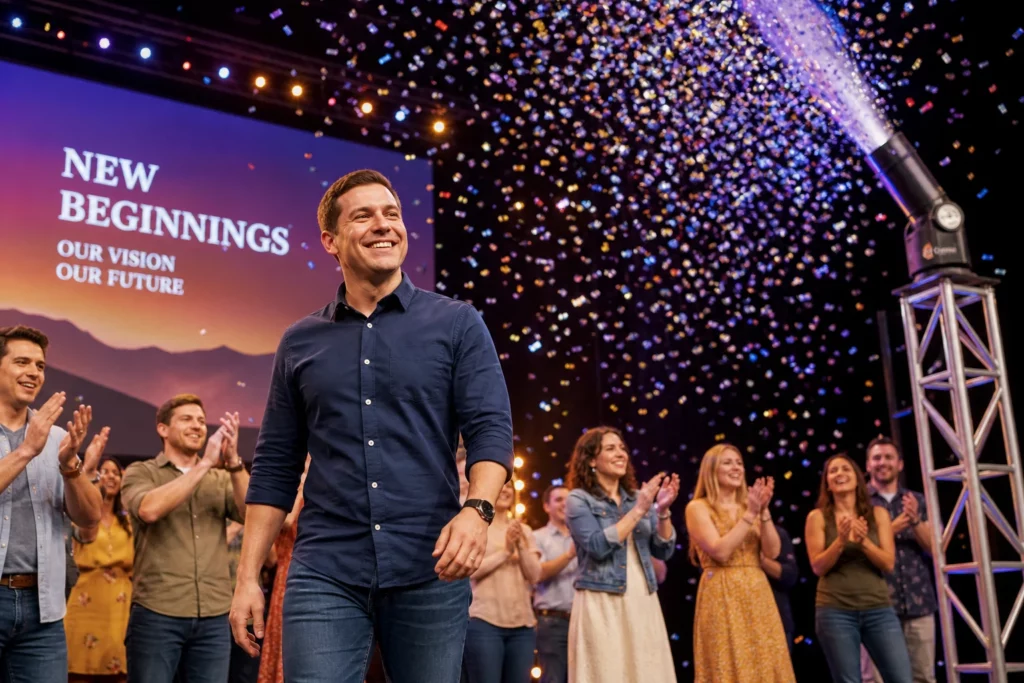
Strategic placement of confetti cannons is as critical as the timing of their blasts. The goal is to ensure maximum visual coverage and impact without obstructing sightlines or creating safety hazards. For large venues like arenas or outdoor festivals, multiple cannons are often deployed across the stage front, wings, and even suspended from rigging above the audience. This multi-point deployment ensures that confetti reaches a wide area, engulfing the audience in a cascade of color. For example, during a major sporting event’s championship celebration, cannons might be positioned around the perimeter of the field or court to create a 360-degree confetti shower, celebrating the victory with an overwhelming visual display. The height and angle of each cannon are meticulously adjusted to account for wind conditions in outdoor settings or ceiling height and airflow within indoor venues, ensuring the confetti disperses effectively and lingers as intended. Industry best practices suggest a minimum of two cannons for stages exceeding 10 meters in width to achieve adequate coverage.
The type of confetti chosen directly influences the visual effect and logistical considerations. As previously noted, slow-fall metallic confetti offers extended hang time, ideal for dramatic, shimmering effects, while biodegradable paper confetti provides vibrant, quick bursts. However, within these categories, there are further nuances. For instance, UV-reactive confetti, often made from specialized paper or plastic, glows intensely under blacklight, creating a surreal and energetic atmosphere for club nights or specific theatrical scenes. Custom-cut confetti, shaped into logos, stars, or hearts, adds a personalized touch for corporate events, product launches, or weddings, reinforcing brand identity or thematic elements. A recent trend involves using confetti infused with scents, adding an olfactory dimension to the visual and auditory experience, though this is less common in large-scale performances due to dispersion challenges. Event planners often consult with confetti suppliers to select the optimal material, cut, and color palette that aligns with the performance’s aesthetic and environmental goals, ensuring the confetti enhances, rather than detracts from, the overall production.
Consideration of cleanup and environmental impact also plays a significant role in confetti selection and deployment. While the visual spectacle is paramount, responsible event production necessitates planning for post-event logistics. Biodegradable confetti, made from rice paper or tissue, is increasingly favored for outdoor events or venues with strict environmental policies, as it breaks down naturally, minimizing ecological footprint. For indoor events, specialized collection nets or high-powered vacuums are often employed to expedite cleanup. The choice of confetti material can significantly affect cleanup time and cost; for example, metallic confetti, while visually stunning, can be more challenging to remove from intricate stage rigging or outdoor grassy areas. A 2021 survey of event managers by the International Live Events Association found that 70% prioritize biodegradable options for outdoor events, reflecting a growing industry commitment to sustainability. This holistic approach, from initial concept to final cleanup, ensures that confetti cannon choreography is not only spectacular but also responsible.
Crafting Unforgettable Moments with Confetti for Cannons
The art of integrating confetti for cannons into a performance transcends mere spectacle; it’s about crafting unforgettable moments that resonate with the audience long after the final note. By meticulously planning timing, selecting appropriate confetti types, understanding cannon mechanics, and adhering to safety protocols, event producers can elevate any show. The visual punctuation provided by a perfectly timed confetti blast can transform a good performance into an extraordinary one, creating a shared, exhilarating experience that binds the audience to the artists. This blend of technical precision and artistic vision is what makes confetti cannon choreography a powerful tool in modern live entertainment.
Bottom Line: Confetti cannon choreography involves precise timing, strategic confetti selection, and understanding cannon mechanics to enhance live performances, creating unforgettable visual and emotional impacts for audiences.
Frequently Asked Questions
What is the difference between CO2 and electric confetti cannons?
CO2 cannons use compressed gas for powerful, immediate bursts, ideal for high-impact moments and portability. Electric cannons use fans or springs for more controlled, sustained confetti streams, often integrated into larger stage systems for continuous effects.
How do event producers choose the right confetti for cannons?
Producers select confetti based on desired visual effect, venue type, and environmental considerations. Options include slow-fall metallic for shimmering effects, biodegradable paper for quick bursts, UV-reactive for blacklight shows, and custom-cut shapes for themed events.
What safety measures are crucial when operating confetti cannons?
Key safety measures include thorough site assessment, operators wearing PPE (eye and ear protection), certified personnel only, maintaining a safe distance from the muzzle (3-5 meters), and planning for post-event cleanup to prevent slip hazards.