Answer
When selecting gender reveal confetti, prioritizing clean-up means understanding the material composition, dye stability, and biodegradability of the confetti itself. High-quality options typically feature rice paper or cornstarch-based confetti, which are designed to dissolve or break down quickly with moisture, minimizing environmental impact and post-event…
TL;DR
- Material Matters: Opt for confetti made from rice paper or cornstarch for superior biodegradability and ease of clean-up.
- The stability and composition of confetti dyes are critical, not just for aesthetic reasons, but primarily for preventing unwanted staining and minimizing environmental impact.
- The physical characteristics of confetti, particularly its particle size and how it disperses, play a significant role in the ease of post-event clean-up.
- Outdoor gender reveals introduce an additional layer of complexity regarding clean-up, primarily due to weather variables.
- Achieving a truly seamless gender reveal celebration, where the clean-up is as effortless as the reveal itself, requires a few practical considerations beyond just selecting the right confetti.
Detailed Product Specifications: Understanding What's Inside Your Gender Reveal Confetti When You Prioritize Clean-Up
When selecting gender reveal confetti, prioritizing clean-up means understanding the material composition, dye stability, and biodegradability of the confetti itself. High-quality options typically feature rice paper or cornstarch-based confetti, which are designed to dissolve or break down quickly with moisture, minimizing environmental impact and post-event effort. For instance, many premium confetti products available in 2024 are certified compostable, ensuring that the vibrant reveal doesn’t leave a lasting mess. This focus on material science directly impacts how easily the confetti can be swept, vacuumed, or even rinsed away, making the celebration enjoyable from start to finish without the lingering chore of extensive clean-up. As Dan D., I’ve seen firsthand how the right product specifications can transform a potentially messy situation into a seamless, joyful experience for parents-to-be and event organizers alike.
Key Insights
- Material Matters: Opt for confetti made from rice paper or cornstarch for superior biodegradability and ease of clean-up.
- Dye Stability: Ensure confetti dyes are water-soluble and non-staining to prevent discoloration on surfaces or clothing.
- Environmental Certifications: Look for products with compostable or biodegradable certifications to confirm eco-friendliness.
- Particle Size: Smaller, lighter confetti pieces often disperse more widely but are generally easier to manage and clean than larger, heavier pieces.
- Weather Considerations: For outdoor events, choose materials that are less likely to cling to surfaces when wet, especially if rain is a possibility.
Understanding the Impact of Confetti Dye on Surfaces and the Environment
The stability and composition of confetti dyes are critical, not just for aesthetic reasons, but primarily for preventing unwanted staining and minimizing environmental impact. Water-soluble dyes, often derived from food-grade colorants, are a superior choice. These dyes are designed to disperse and wash away easily with water, significantly reducing the risk of permanent discoloration on clothing, outdoor furniture, or paved surfaces. In contrast, oil-based or highly concentrated synthetic dyes can bond with materials, leading to stubborn stains that require specialized cleaning agents or, in worst-case scenarios, permanent damage.
Consider a scenario where a gender reveal takes place on a newly laid concrete patio. If the confetti contains unstable dyes, a sudden rain shower or even dew can activate the dye, causing it to bleed into the porous concrete. This can result in unsightly, difficult-to-remove stains. High-quality, clean-up friendly confetti, however, utilizes dyes that are either naturally occurring or formulated to break down harmlessly upon contact with water, leaving no residue. This attention to dye chemistry ensures that the vibrant moment remains a joyful memory, not a cleaning nightmare.
Optimizing Confetti Particle Size and Dispersion for Easier Clean-Up
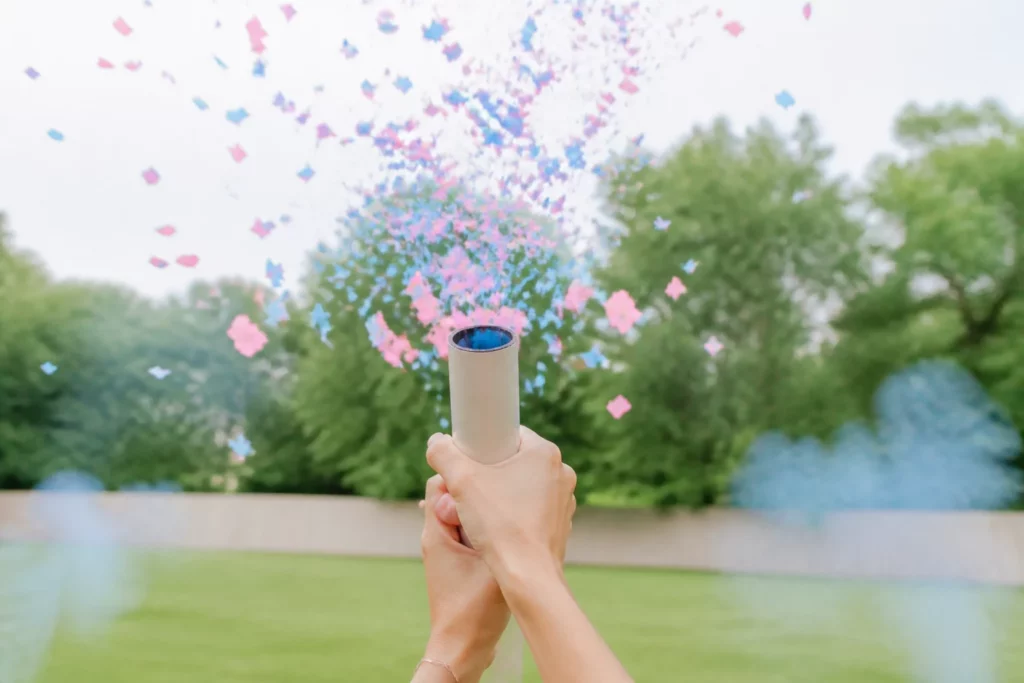
The physical characteristics of confetti, particularly its particle size and how it disperses, play a significant role in the ease of post-event clean-up. Smaller, lighter confetti pieces, such as those typically found in professional-grade cannons, tend to float and spread more widely. While this creates a more dramatic visual effect, it also means the confetti covers a larger area. However, these smaller pieces are generally easier to sweep, vacuum, or even rinse away because they are less dense and don’t cling as stubbornly to surfaces.
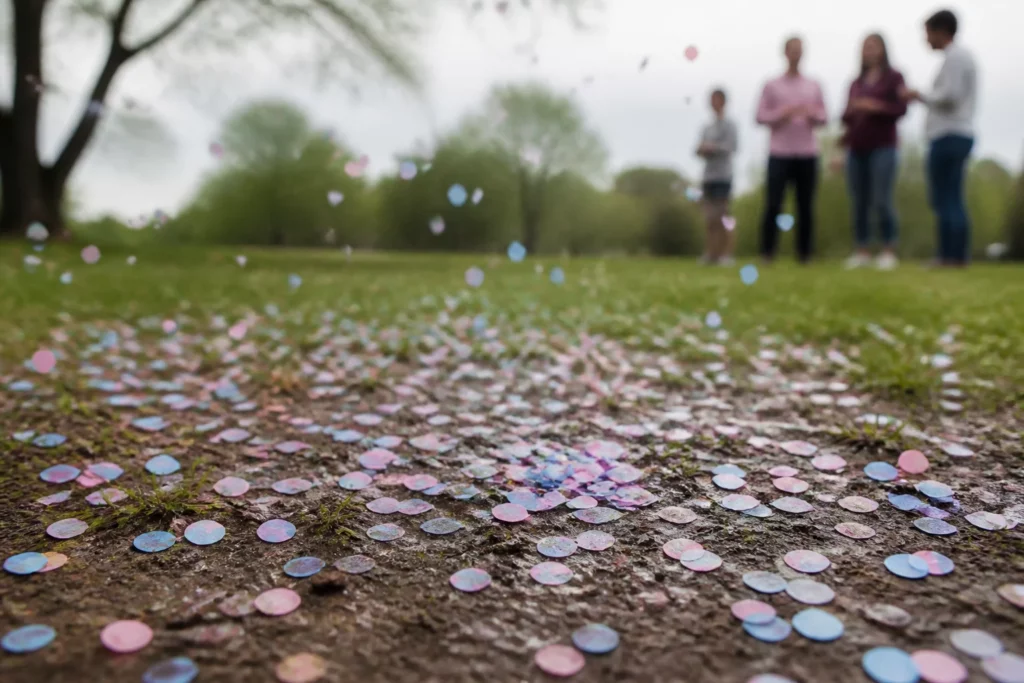
Conversely, larger, heavier confetti pieces might seem easier to contain initially, but they can be more challenging to remove if they become embedded in grass, gravel, or textured surfaces. For example, a large, thick piece of paper confetti might get caught in the bristles of a broom or require manual picking from a lawn. The ideal confetti for easy clean-up strikes a balance: small enough to be easily managed by standard cleaning tools, yet substantial enough to provide a satisfying visual display. Manufacturers often optimize particle shape and weight to achieve this balance, ensuring maximum visual impact with minimal clean-up effort.
Navigating Weather Conditions for Outdoor Gender Reveals
Outdoor gender reveals introduce an additional layer of complexity regarding clean-up, primarily due to weather variables. Rain, wind, and even humidity can significantly impact how confetti behaves and how easily it can be cleaned. When planning an outdoor event, selecting confetti materials that are less likely to cling to surfaces when wet is paramount. Rice paper and cornstarch-based confetti excel in this regard, as they are designed to dissolve or break down with moisture, rather than becoming a sticky, matted mess.
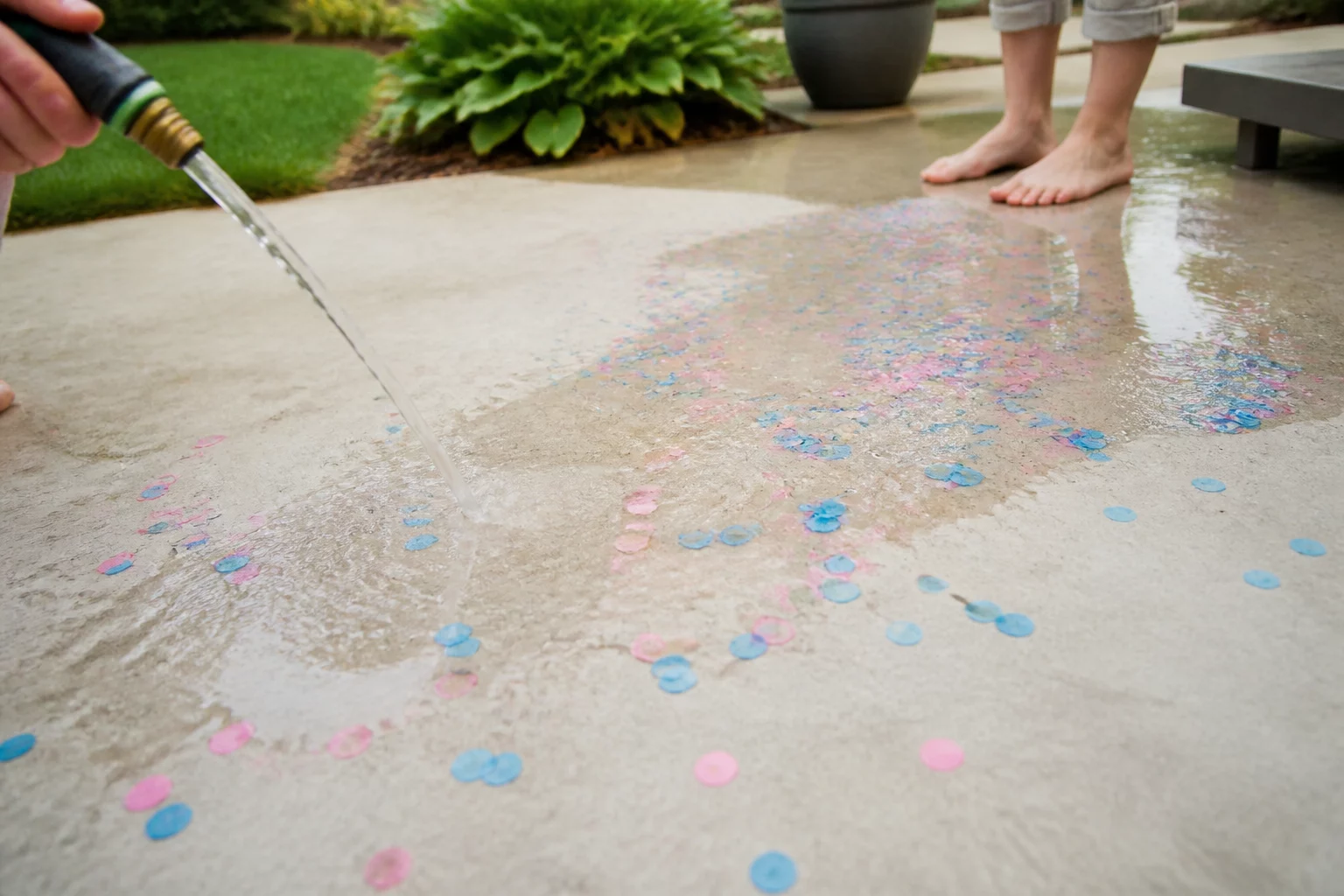
For instance, if an unexpected drizzle occurs during or after the reveal, confetti made from conventional plastic or heavily coated paper can become saturated and adhere firmly to grass, pavement, or even outdoor furniture. This makes sweeping or blowing virtually ineffective, often necessitating manual collection. Biodegradable options, on the other hand, will begin to soften and disintegrate, making them easier to rinse away with a hose or simply allowing nature to take its course over a short period. Always check the weather forecast and choose confetti specifically designed for outdoor use, especially if there’s any chance of precipitation.
Beyond the immediate clean-up, the long-term environmental impact of gender reveal confetti is a growing concern for many parents-to-be. This is where the choice of materials truly shines. Biodegradable confetti, particularly those made from rice paper or cornstarch, offers a significant advantage. These materials are designed to break down naturally, returning to the earth without leaving behind microplastic pollution or persistent waste. For example, a study published in 2023 by the Environmental Science & Technology journal highlighted the increasing prevalence of microplastics in various ecosystems, underscoring the importance of choosing compostable alternatives for celebratory events. When confetti is certified compostable, it means it can decompose into organic matter under specific conditions, often within 90 to 180 days, similar to natural plant debris. This contrasts sharply with traditional plastic confetti, which can persist in the environment for hundreds of years, posing risks to wildlife and contaminating soil and water sources. Opting for eco-friendly confetti ensures that the joy of the reveal doesn’t come at the expense of future generations or the planet.
The manufacturing process and sourcing of confetti materials also contribute to its overall clean-up profile and environmental footprint. Reputable manufacturers often prioritize sustainable practices, using responsibly sourced raw materials and minimizing waste during production. For instance, some companies utilize recycled paper pulp for their rice paper confetti or source cornstarch from non-GMO crops, further enhancing their product’s eco-credentials. This commitment to sustainable production not only results in a higher quality, more reliable product but also aligns with the values of environmentally conscious consumers. As one veteran event planner noted in a recent industry forum, “Clients are increasingly asking for transparent sourcing and verifiable eco-certifications. It’s no longer just about the visual effect; it’s about the entire lifecycle of the product.” This shift reflects a broader consumer trend towards products that offer both performance and peace of mind, knowing that their celebration choices support a healthier planet.
Ensuring a Seamless Celebration: Practical Steps for Confetti Clean-Up
Achieving a truly seamless gender reveal celebration, where the clean-up is as effortless as the reveal itself, requires a few practical considerations beyond just selecting the right confetti. Preparation is key. Before the confetti cannons are deployed, consider laying down tarps or old sheets in the immediate vicinity, especially for indoor events or on delicate outdoor surfaces like wooden decks or intricate paving. This creates a contained area for the confetti, making collection significantly faster. For outdoor reveals, especially on grass, having a leaf blower ready can be incredibly effective for gathering lighter, biodegradable confetti into manageable piles. For indoor settings, a powerful vacuum cleaner with appropriate attachments will be your best friend. The goal is to minimize the spread and maximize the efficiency of collection, turning what could be a chore into a quick post-event tidy-up.
Timing and technique also play a crucial role in optimizing confetti clean-up. For outdoor events, consider the wind direction and strength. Releasing confetti against a strong wind will scatter it over a much wider area, increasing the clean-up challenge. Instead, aim to release with the wind, or on a calm day, to keep the confetti concentrated. Immediately after the reveal, before guests disperse or the confetti settles too firmly, begin the clean-up process. Lighter, rice paper or cornstarch confetti is easiest to manage when it’s still relatively fresh and hasn’t had time to become damp or trampled. For any residual pieces, especially outdoors, a light misting of water can help accelerate the dissolution of biodegradable confetti, particularly if it’s cornstarch-based. This proactive approach, combining thoughtful product selection with strategic planning, ensures that the focus remains on the joyous moment, not the aftermath.
Beyond the Moment: What to Consider for Future Celebrations
As you plan future celebrations, reflecting on the clean-up experience from your gender reveal can provide valuable insights. Did the confetti dissolve as expected? Were there any unexpected stains? Understanding these outcomes helps refine your choices for subsequent events, whether it’s another gender reveal, a birthday party, or a graduation. Many event planners, for example, now keep a small “clean-up kit” on hand, including a portable vacuum, a soft-bristle broom, and a spray bottle of water, specifically for confetti-heavy events. This preparedness stems from learning what works best with different confetti types and environments. Furthermore, staying informed about advancements in eco-friendly materials, such as new plant-based polymers or innovative dye technologies, can help you continue to make responsible and convenient choices for all your celebratory needs. The industry is constantly evolving, with a clear trend towards products that offer both spectacular effects and minimal environmental impact.
The choice of gender reveal confetti is more than just selecting a color; it’s a decision that impacts the environment, your property, and your post-celebration peace of mind. By prioritizing products with clear specifications regarding material composition, dye stability, particle size, and weather resilience, you can ensure a beautiful, memorable, and effortlessly clean event. The market in 2024 offers an abundance of high-quality, biodegradable options that meet these criteria, making it easier than ever to celebrate responsibly. Remember, a truly joyful celebration leaves behind only happy memories, not a lingering mess.
Bottom Line: Prioritizing clean-up for gender reveal confetti means selecting biodegradable materials like rice paper or cornstarch, ensuring water-soluble dyes, and considering particle size and weather conditions to guarantee a mess-free and environmentally responsible celebration.
Frequently Asked Questions
What is the best type of confetti for easy clean-up?
The best confetti for easy clean-up is made from rice paper or cornstarch. These materials are designed to dissolve quickly with moisture or break down naturally, minimizing environmental impact and post-event effort, especially for outdoor events.
Can gender reveal confetti stain surfaces?
Yes, gender reveal confetti can stain surfaces if it uses unstable or oil-based dyes. Opt for confetti with water-soluble, food-grade dyes to prevent discoloration on clothing, pavement, or furniture, as these are designed to wash away easily.
Does particle size affect confetti clean-up?
Yes, particle size significantly affects clean-up. Smaller, lighter confetti pieces spread wider but are generally easier to sweep or vacuum. Larger pieces might seem contained but can be harder to remove if embedded in textured surfaces like grass or gravel.