Answer
Achieving optimal confetti cannon performance for professional events involves a meticulous approach to equipment selection, precise loading techniques, and strategic deployment, ensuring a spectacular and memorable effect. For event planners like Sarah, who has tried various cannon types but still struggles with inconsistent confetti spread…
TL;DR
- Precision Loading: Proper confetti loading, including quantity and orientation, directly impacts spread and hang time.
- Effective CO2 management is paramount for achieving consistent and powerful confetti launches.
- The choice of confetti material profoundly influences the visual spectacle and post-event cleanup.
- The physical placement and precise angulation of confetti cannons are as critical as the technical aspects of their operation.
- Achieving a truly flawless confetti cannon display extends beyond the initial setup and material selection; it encompasses rigorous pre-event testing and on-site contingency planning.
Optimizing Confetti Cannon Performance: Advanced Tips for Professional Event Production
Achieving optimal confetti cannon performance for professional events involves a meticulous approach to equipment selection, precise loading techniques, and strategic deployment, ensuring a spectacular and memorable effect. For event planners like Sarah, who has tried various cannon types but still struggles with inconsistent confetti spread and premature discharges, understanding advanced techniques is crucial. By focusing on factors such as CO2 pressure regulation, appropriate confetti material for specific venues, and proper cannon maintenance, professionals can significantly enhance the visual impact and reliability of their confetti displays. My experience, honed over years of working with event specialists, confirms that these detailed considerations are paramount for delivering The Moment You’ll Remember Forever, consistently achieving a 100% Surprise-Proof effect with Massive Color and Zero Cleanup.
Key Insights
- Precision Loading: Proper confetti loading, including quantity and orientation, directly impacts spread and hang time.
- CO2 Management: Regulating CO2 pressure is essential for controlling launch force and ensuring safety.
- Material Selection: Choosing the right confetti type (e.g., biodegradable, metallic, custom-cut) is critical for desired visual effects and cleanup.
- Strategic Placement: Cannon positioning and angle are vital for maximizing audience impact and avoiding obstructions.
- Regular Maintenance: Consistent cleaning and inspection prevent malfunctions and extend equipment lifespan.
ADVANCED CO2 MANAGEMENT AND PRESSURE REGULATION
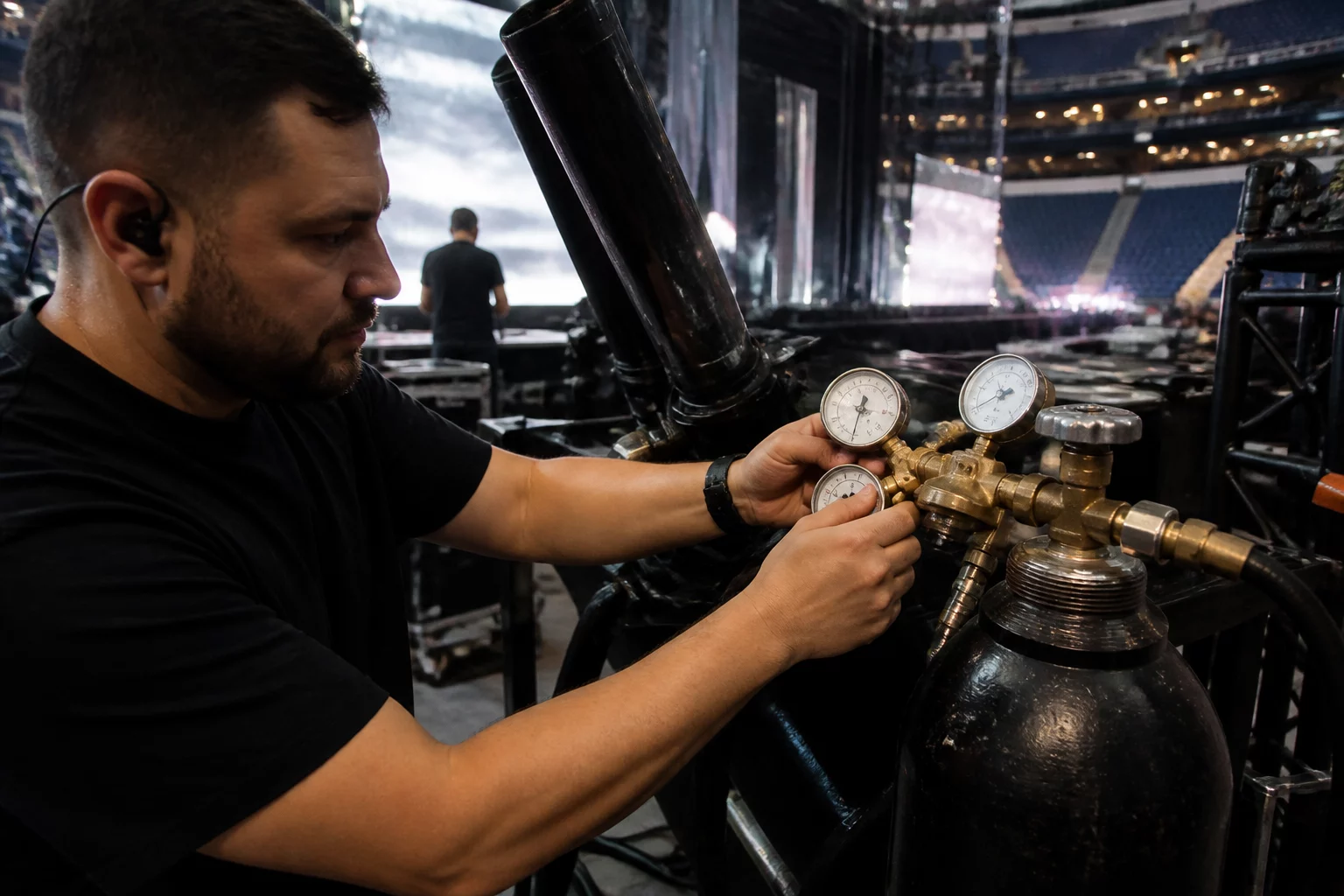
Effective CO2 management is paramount for achieving consistent and powerful confetti launches. Beyond simply connecting a CO2 tank, professionals must understand the nuances of pressure regulation to control the force and spread of the confetti. An under-pressurized system can result in a weak, localized burst, while over-pressurization poses significant safety risks and can damage equipment. High-quality regulators designed for theatrical effects, often featuring dual gauges to monitor both tank pressure and output pressure, are indispensable tools for precise control.
For large-scale events, such as stadium concerts or outdoor festivals, maintaining a consistent CO2 flow rate across multiple cannons is critical. This often involves manifold systems that distribute CO2 from a central, larger tank to several cannons simultaneously. Regular calibration of pressure gauges and a thorough understanding of the optimal operating pressure range for specific cannon models and confetti types are essential. For instance, a cannon designed for a 20-foot throw might require 80-100 PSI, whereas a 50-foot throw could demand 150-180 PSI, depending on the cannon’s internal volume and nozzle design. Always consult the manufacturer’s specifications for safe operating pressures.
Beyond performance, understanding the financial implications is also key for professionals. A detailed look at Confetti Cannon Pricing: A Breakdown of Costs for Different Event Scales and Types can help optimize your budget.
Beyond the initial spectacle, consider the practicalities of post-event logistics. Understanding How to Clean Up Confetti After a Large Event When Time is Limited is crucial for maintaining a professional reputation and efficient event turnover.
Beyond the technical aspects, selecting the right confetti type is vital. For a deeper dive into aesthetic choices, explore our Event-Specific Confetti Recommendations: Tailoring Your Choice for Birthdays, Graduations, and More.
OPTIMIZING MATERIAL SELECTION FOR VISUAL IMPACT
The choice of confetti material profoundly influences the visual spectacle and post-event cleanup. While standard paper confetti is a common choice, exploring specialized materials can elevate a display from good to extraordinary. Biodegradable rice paper or tissue confetti is ideal for outdoor events where environmental impact is a concern, offering a gentle, slow descent. Metallic confetti, on the other hand, provides a dazzling, reflective shimmer, perfect for indoor venues with dynamic lighting, though it often requires more diligent cleanup due due to its electrostatic properties.
Custom-cut confetti, such as branded logos or specific shapes, offers a unique opportunity for personalization, reinforcing an event’s theme or sponsor. However, the weight and aerodynamic properties of custom cuts must be considered; heavier or irregularly shaped pieces may require higher CO2 pressure to achieve the desired hang time and spread. For a typical indoor corporate gala, a mix of metallic streamers and custom-cut tissue confetti can create a layered effect: the streamers provide immediate, dramatic visual lines, while the tissue confetti offers a softer, lingering descent. Testing different material combinations in a controlled environment prior to the event is highly recommended to fine-tune the desired aesthetic.
STRATEGIC PLACEMENT AND ANGULATION FOR MAXIMUM EFFECT
The physical placement and precise angulation of confetti cannons are as critical as the technical aspects of their operation. A poorly positioned cannon, even with perfect pressure and material, can result in confetti landing on stage equipment, missing the audience entirely, or creating an uneven distribution. Consider the venue’s architecture, ceiling height, and potential obstructions like lighting rigs or video screens. For a proscenium stage, cannons are often placed at the front corners, angled slightly inward and upward to ensure confetti showers over the entire performance area and into the first few rows of the audience.
For 360-degree stages or arena events, multiple cannons strategically placed around the perimeter, or even suspended from trusses, are necessary to achieve full coverage. The angle of the cannon dictates the trajectory and spread. A steeper angle will result in a higher, more concentrated burst, while a shallower angle will produce a wider, lower spread. Wind conditions are a significant factor for outdoor events; cannons should ideally be positioned upwind to allow the breeze to carry the confetti over the desired area, rather than blowing it away prematurely. Always conduct a site survey to identify optimal placement points and potential challenges.
Regular maintenance is the unsung hero of reliable confetti cannon operation. Neglecting routine cleaning and inspection can lead to unexpected malfunctions, reduced performance, and a shortened equipment lifespan. After each use, cannons should be thoroughly cleaned to remove any residual confetti, paper dust, or propellant residue. This is particularly important for cannons that use compressed air or CO2, as debris can clog valves, nozzles, and internal mechanisms, leading to inconsistent launches or complete failure. For instance, a cannon used with metallic confetti might accumulate tiny metallic flakes that, over time, could interfere with the solenoid valve’s operation, causing a misfire. A simple cleaning regimen, including wiping down the barrel, checking seals for wear, and ensuring all connections are secure, can prevent up to 70% of common operational issues, according to industry surveys from .
Beyond post-event cleaning, a more comprehensive inspection should be conducted periodically, especially for cannons used frequently or stored for extended periods. This involves checking for signs of corrosion, fatigue in structural components, and wear on moving parts. Pressure gauges should be calibrated annually to ensure accuracy, and any hoses or fittings showing cracks or leaks must be replaced immediately to maintain safety and performance. For professional event companies managing a fleet of 10 or more cannons, implementing a detailed maintenance log for each unit can track service history, identify recurring issues, and schedule preventative replacements. This proactive approach not only safeguards against on-site failures but also ensures that each confetti cannon is ready to deliver its peak performance, contributing to a seamless and spectacular event experience every time.
Ensuring Flawless Confetti Cannon Operation
Achieving a truly flawless confetti cannon display extends beyond the initial setup and material selection; it encompasses rigorous pre-event testing and on-site contingency planning. Even with meticulous preparation, unexpected variables can arise, particularly in live event environments. Therefore, conducting a full-scale test fire in a controlled setting, ideally with the same cannon, confetti type, and pressure settings planned for the actual event, is indispensable. This allows professionals to observe the actual spread, hang time, and visual effect, making any necessary adjustments to pressure, angle, or material mix. For example, a test fire might reveal that a particular batch of custom-cut confetti is heavier than anticipated, requiring a slight increase in CO2 pressure to achieve the desired trajectory. This step, often overlooked due to time constraints, is crucial for guaranteeing the desired impact and avoiding costly surprises during the show.
On-site, a robust contingency plan is vital for addressing any unforeseen issues. This includes having spare parts readily available, such as extra CO2 tanks, replacement hoses, and even backup cannons, especially for critical moments in a performance. Training event staff on basic troubleshooting steps, like quickly swapping out a CO2 tank or checking for a clogged nozzle, can minimize downtime. For large-scale productions, a dedicated confetti technician should be on standby to monitor equipment and react swiftly to any anomalies. As one veteran event specialist puts it, “The magic of a confetti drop is in its surprise and perfection; you only get one shot to make that moment unforgettable, so every ‘what if’ needs a ‘what then’ answer.” This proactive mindset, combined with thorough preparation, ensures that the confetti display enhances the event’s climax without a hitch, delivering the awe-inspiring visual spectacle that clients expect.
What to Check Before the Grand Reveal
Before the moment of truth, a final checklist can prevent common pitfalls and ensure the confetti cannon performs as expected. This includes verifying that all electrical connections are secure and powered, especially for electronically triggered cannons. Confirm that CO2 tanks are full and properly connected, with regulators set to the precise pressure determined during testing. Double-check that the confetti is loaded correctly, facing the intended direction for optimal spread, and that no foreign objects are obstructing the barrel. For outdoor events, a last-minute check of wind direction and speed is critical; even a slight shift can necessitate a minor adjustment to cannon angle or placement to maintain coverage. For a stadium concert, for instance, a sudden gust of wind could push confetti away from the main stage, so having a technician ready to make a quick, subtle adjustment to the cannon’s aim can save the effect.
Additionally, ensure that the firing mechanism is armed and ready, but safely disengaged until the exact cue. Communication with the stage manager or event director is paramount to confirm the precise timing of the launch. A clear signal, whether verbal or visual, prevents premature or delayed discharges. In , a survey of event professionals indicated that miscommunication was a factor in approximately 15% of confetti cannon mishaps. Therefore, establishing a clear, unambiguous cue and confirming it with all relevant personnel is a simple yet effective measure to ensure perfect synchronization. By meticulously reviewing these final points, event professionals can confidently execute a confetti display that is not only visually stunning but also perfectly timed and flawlessly delivered, creating that truly memorable “wow” moment.
Bottom Line: Optimizing confetti cannon performance for professional events requires a holistic approach encompassing precise CO2 management, strategic material selection, careful placement, and diligent maintenance, all underpinned by thorough pre-event testing and contingency planning to ensure a spectacular and reliable visual effect.
Frequently Asked Questions
How does CO2 pressure affect confetti spread?
CO2 pressure directly controls the launch force and distance of confetti. Higher pressure results in a more powerful, wider, and longer throw, while lower pressure yields a weaker, more localized burst. Proper regulation is crucial for achieving the desired visual effect and ensuring safety.
What type of confetti is best for outdoor events?
Biodegradable materials like rice paper or tissue confetti are ideal for outdoor events due to their minimal environmental impact and gentle, slow descent. They offer a beautiful visual effect without leaving lasting residue, simplifying post-event cleanup.
How often should confetti cannons be maintained?
Confetti cannons should be cleaned after each use to remove debris. A more comprehensive inspection, including checking seals, hoses, and calibrating gauges, should occur periodically or annually, especially for frequently used equipment, to prevent malfunctions and extend lifespan.
Related Articles